
1. Introduction
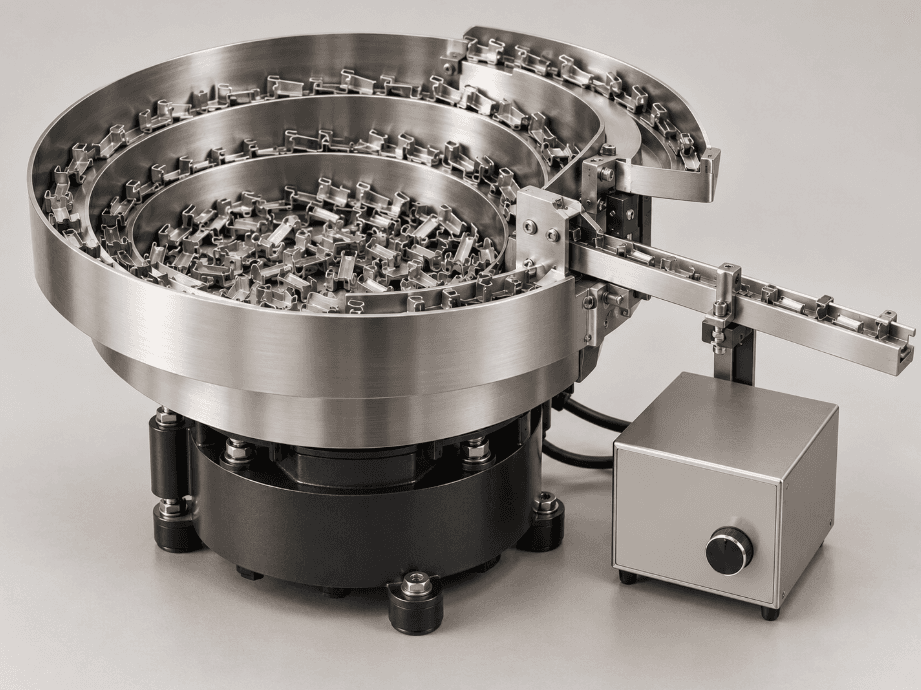
CNC vibratory feeder tracks are the unsung workhorses of automated assembly. They guide parts from the bowl to the next station, and they do it thousands of times a shift. If the track material wears out, jams occur, parts get damaged, and the whole line stops.
The track is the contact surface for the parts. Every vibration cycle creates friction. Every part sliding along the track creates wear. Over time, the groove depth changes, the surface finish degrades, and part orientation becomes inconsistent.
This guide reviews the three primary material categories for CNC vibratory feeder tracks: hardened tool steel, stainless steel, and polymer options. We'll cover performance characteristics, application fit, and selection criteria.
2. Hardened Tool Steel – The Wear-Resistance Standard
Hardened tool steel is the traditional choice for high-volume, high-wear applications. It offers the best combination of hardness, durability, and cost-effectiveness.
A2 tool steel is a common specification. One supplier notes that inline linear tracks are "formed out of A2 tool steel and heat treated for maximum durability" . The heat treatment process increases surface hardness, reducing wear from abrasive parts.
The track running surface can receive additional treatments. Carburizing with black oxide finish is standard. For applications requiring lower friction, nickel plating or flash chrome can be applied .
Why tool steel works: The high hardness—typically 58-62 HRC after heat treatment—resists abrasive wear from metal parts, ceramics, and composites. The material can be machined to tight tolerances and holds its shape under vibration. Replacement cost is moderate compared to stainless.
Limitations: Tool steel rusts. It's not suitable for wet environments, food contact, or applications requiring corrosion resistance. The surface finish can be rough compared to polished stainless. Parts with delicate finishes may scratch.
3. Stainless Steel – Corrosion Resistance and Hygiene
Stainless steel tracks offer corrosion resistance, cleanability, and a polished surface finish that protects parts from damage.
316 stainless steel is the most common grade for feeder tracks. It resists corrosion from moisture, chemicals, and cleaning agents. Food-grade applications frequently specify 316 stainless . Some systems use 303 or 304 stainless for the core structure .
Performance characteristics: Stainless steel has lower hardness than tool steel—typically 180-220 HB (Rockwell B80-90). This means it wears faster under abrasive conditions. However, it maintains its surface finish better than tool steel and doesn't flake or degrade when corrosion is a concern.
Nylon powder coating can be applied to stainless steel tracks to combine the structural strength of steel with the low-friction, wear-resistant properties of polymer. One patent describes coating stainless steel rods with Nylon 12 via powder coating, creating a durable, seamless shell with hardness of 75 Shore D and a coefficient of friction approximately 40% lower than bare stainless steel . This coating approach prevents black oxide formation in conveyor applications and provides FDA-compliant surfaces for food contact.
When to specify stainless:
Food and pharmaceutical applications requiring FDA compliance
Wet or wash-down environments
Corrosive part materials or cleaning chemicals
Applications where part scratching is unacceptable
4. Polymer and Coated Track Options
Polymer tracks and coated surfaces are gaining ground. They offer low friction, noise reduction, and part protection.
Polyamide (nylon) bowls are an option for smaller feeders, though they have limitations—step design bowls, which provide tooling flexibility, are not always possible with polyamide . For tracks, polymer coatings are more common than solid polymer tracks.
Polyurethane coatings are applied to both cast aluminum and stainless steel bowls to reduce noise and extend life. The coating eliminates metal-to-metal contact and provides a wear-resistant surface. Elscinthane sprayable polyurethane coatings are available in thicknesses from 0.40 mm to 2 mm and above .
Nylon powder coating on stainless steel tracks reduces friction and extends wear life. Test data shows that nylon-coated stainless steel rods exhibit essentially identical wear rates to bare stainless steel while preventing black oxide formation . The coefficient of friction between acetal and nylon-coated steel is 0.12, compared to 0.2 for uncoated steel—a 40% reduction .
When to consider polymer/coated tracks:
Noisy applications (coating reduces vibration noise)
Delicate parts requiring scratch-free handling
Low-to-medium volume where wear is less critical
Applications where metal-to-metal contact generates contamination (e.g., cleanroom, medical device assembly)
5. Material Selection Criteria
Here's a comparison table to guide selection:
Criterion | Hardened Tool Steel | Stainless Steel | Polymer/Coated Track |
Wear Resistance | High | Moderate | Moderate (coating-dependent) |
Corrosion Resistance | Poor | Excellent | Good (if applied to stainless) |
Surface Finish | Moderate (can be plated) | Excellent | Good (smooth coating) |
Part Scratching Risk | Moderate | Low | Very Low |
Cost | Moderate | High | Moderate-High |
FDA/Food Grade | No | Yes | Yes (with suitable coating) |
Noise Level | High | High | Reduced |
Typical Applications | High-wear, dry parts | Food, pharma, wet env. | Delicate parts, cleanroom |
6. Conclusion
The track material selection for a CNC vibratory feeder directly affects system performance and total cost of ownership. Hardened tool steel, specifically A2 with appropriate heat treatment, delivers the highest wear resistance and is the standard choice for high-volume metal parts feeding . Stainless steel, particularly 316, provides corrosion resistance and hygiene for food, pharmaceutical, and wet applications . Polymer and coated tracks, including nylon powder coating on stainless steel, offer reduced friction, lower noise, and part protection advantages .
Selection should consider part material, abrasiveness, environmental conditions, cycle volume, and regulatory requirements. Work with your feeder supplier to match the track material to your specific application—and verify the availability of coatings, plating, or finishing options that extend service life.
7. Frequently Asked Questions (FAQ)
Q: What is the most common material for CNC vibratory feeder tracks?
A: A2 tool steel is a standard choice. It's heat-treated for hardness and durability in high-volume applications. Stainless steel (316) is specified when corrosion resistance or food-grade compliance is required .
Q: How does nylon powder coating improve stainless steel track performance?
A: Nylon coating reduces the coefficient of friction (by approximately 40% compared to bare stainless) and prevents black oxide formation. The coating provides a durable, FDA-compliant surface that extends wear life while maintaining the underlying strength of the steel .
Q: Can polyurethane coatings be applied to feeder tracks?
A: Yes. Sprayable polyurethane coatings are available for both cast aluminum and stainless steel bowls and tracks. They reduce noise, eliminate metal-to-metal contact, and extend component life. Coatings are available in thicknesses from 0.40 mm to 2 mm .
Q: Is polymer track suitable for high-wear applications?
A: Solid polymer tracks have limitations in high-wear environments. Polymer coatings applied to steel substrates offer better wear resistance than solid polymer alone. For very abrasive parts, hardened tool steel remains the preferred choice .
Q: What factors should I consider when selecting a feeder track material?
A: Consider part material and abrasiveness, environmental conditions (moisture, chemicals), production volume, hygiene requirements, and noise constraints. The feeder manufacturer can provide guidance based on your specific application.